Quick answer
Formative evaluation happens while a program is running, to improve it. Summative evaluation happens at or near the end of a program cycle, to judge whether it worked and whether it should continue, expand or stop. Developmental evaluation supports programs that are still being invented, in complex settings where the model itself is expected to change.
These describe the purpose of an evaluation; process and outcome describe what it examines. Most programs need a formative approach early and a summative one once outcomes have had time to appear. The right choice depends on the decision the findings will inform, and when.
The simplest way to remember the difference
Evaluator Robert Stake’s well-known analogy: when the cook tastes the soup, that is formative; when the guests taste the soup, that is summative.
The cook tastes to adjust the recipe while there is still time to change it. The guests judge the finished dish. Same soup, different purpose, different moment, and a different person doing the judging. Developmental evaluation is closer to a cook inventing a new recipe in an unfamiliar kitchen, tasting constantly and changing course as they learn.
Side by side
| Formative | Summative | Developmental | |
|---|---|---|---|
| Main purpose | Improve the program | Judge its merit and value | Support innovation as it develops |
| When | During delivery, often early | At or near the end of a cycle | Throughout, from the start |
| Typical questions | What is working, what isn’t, what should change? | Did it achieve its outcomes? Should it continue, expand or stop? | What is emerging? What should we try next? |
| Main audience | Program team and leadership | Funders, the board and decision-makers | Innovators and their partners |
| Evaluator’s role | An advisor feeding back findings | An independent assessor | An embedded member of the team |
| Best fit | New or changing programs | Mature, stable programs | Complex problems with no proven model |
How this fits with process and outcome evaluation
Formative and summative describe why you are evaluating. Process and outcome describe what you are looking at: how the program is delivered and to whom, or what changes for participants.
They often pair up. Process evaluations are usually used formatively, to improve delivery, and outcome evaluations are often summative, to judge results. But not always: outcome data reviewed mid-program can be used to adjust the program, which is formative use. The practical question is the same either way: what decision will this inform? For the scope each type involves, see what a program evaluation delivers.
How to choose
- What decision will the findings inform, and when? Improving delivery points to formative; continuing, expanding or ending points to summative.
- How settled is the program model? A model still taking shape suits formative or developmental evaluation, not a summative verdict.
- Has it run long enough for outcomes to appear? Judging outcomes too early is the most common reason summative evaluations disappoint.
- Who needs the findings? A program team needs fast, practical feedback; a funder making a renewal decision needs independence and rigour.
- What does the funder actually require? Read past the label to the questions and reporting they ask for.
- What can you afford? Developmental evaluation needs ongoing involvement; summative evaluation needs enough independence to be credible.
Which one, in practice
- A new pilot: formative evaluation now, with a plan and baseline for a summative evaluation later.
- A mature program facing a renewal decision: summative evaluation, ideally independent.
- A collaborative or systems-change initiative with no proven model: developmental evaluation.
- A program expanding to new sites: formative evaluation at the new sites, alongside summative evidence from the original one.
- A funder asking for “an evaluation” without detail: ask what decision they will use it for. The answer is often a formative process evaluation with a few outcome indicators.
A closer look at developmental evaluation
Developmental evaluation, an approach associated with evaluator Michael Quinn Patton, was designed for innovation in complex settings, where cause and effect are hard to predict and the program is expected to change as it learns. Instead of testing a fixed model, the evaluator works alongside the team, feeding back data and observations quickly so the team can decide what to try next.
It suits collaborative initiatives, new approaches to entrenched problems and situations with no established model. It is not a way to avoid accountability: it still needs clear documentation of what was tried, what was learned and why the approach changed. And because it relies on an ongoing presence, it tends to need sustained rather than one-off resourcing.
Combining them over a program’s life
- Plan. Build a logic model and evaluation plan before or at launch, including a baseline.
- Improve. Use formative evaluation in the first cycle to fix delivery problems early.
- Monitor. Track a small set of indicators routinely between evaluations.
- Judge. Commission a summative evaluation once the program is stable and outcomes have had time to appear.
- Innovate. Use developmental evaluation for new initiatives within or alongside the program.
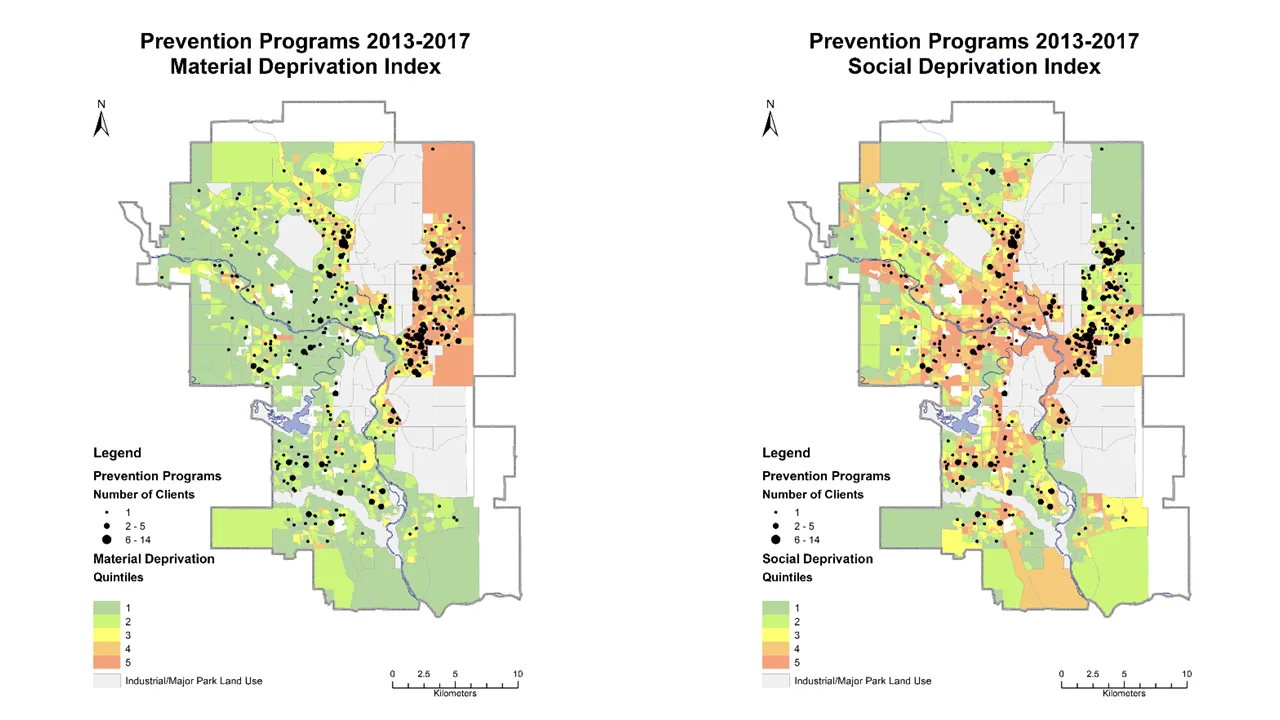
Evaluation questions about reach can be useful at any stage. Our evaluation of homelessness prevention programs in Calgary, for example, asked whether programs were reaching the communities with the greatest need. And where an evaluation has already been done by someone else, an independent peer review can test whether its conclusions hold, as we did for two third-party assessments for the Sinneave Family Foundation.
Common mistakes
- A summative verdict on a program that is too new. It usually finds weak outcomes that more time would have changed.
- Formative findings that nobody acts on. If there is no process for using the feedback, the evaluation is wasted.
- Calling monitoring an evaluation. Tracking indicators is essential, but it doesn’t explain why results look the way they do.
- Using “developmental” to avoid accountability. Learning still needs to be documented and shared.
- A summative evaluation run only by the program team. It may be accurate, but funders will find it harder to trust.
Common questions
Is a process evaluation the same as a formative evaluation?
Not exactly. Process evaluation describes what is examined: how a program is delivered and to whom. Formative describes the purpose: improvement. Process evaluations are usually formative, but the terms answer different questions.
Can one evaluation be both formative and summative?
Yes, as long as you are explicit about which findings serve which decision. Mixed purposes can create tension, for example when staff are asked for candid feedback that may also be used to judge the program.
Does a summative evaluation have to be done externally?
It isn’t always required, but independence strengthens credibility, especially when the findings will inform funding decisions. Check what your funder expects.
When is a program ready for a summative evaluation?
When its model is stable and it has run long enough for the outcomes in its logic model to appear. That is often after at least one full program cycle.
What is an impact evaluation?
An evaluation designed to determine whether the program caused the changes observed, usually by comparing participants with a similar group who did not take part. It is a demanding form of summative outcome evaluation.
What does a funder mean when it asks for “an evaluation”?
It varies. Ask what decision the funder will use it for and what it needs in the final report. Often a formative process evaluation with a few clearly defined outcome indicators is what is expected.
The short answer
Formative evaluation improves a program while it runs; summative evaluation judges whether it worked; developmental evaluation supports innovation where the model is still taking shape. Choose based on the decision the findings will inform and how mature the program is, and plan to use different approaches at different stages.
Geo-Lens is a Calgary-based research, evaluation and funding consultancy working with nonprofits, charities, health organizations and research teams across Canada. Our program evaluation work covers evaluation plans and logic models, formative and summative evaluations, outcome and KPI frameworks, place-based analysis and independent peer review of evaluations commissioned elsewhere.