Quick answer
A program evaluation answers specific questions about a program, such as whether it reaches the people it was designed for, how well it is delivered and what difference it makes, using evidence that is collected and analyzed systematically. A complete evaluation typically delivers an evaluation framework, data collection tools, analysis, a findings report and recommendations, usually built on a logic model or theory of change.
What varies is scope. An evaluation plan, a process evaluation and an outcome evaluation are very different pieces of work. Before comparing proposals, be clear which questions you need answered, who the findings are for and what decision they will inform.
Why evaluation proposals are hard to compare
Organizations usually commission an evaluation because someone needs evidence: a funder’s reporting requirement, a board deciding whether to expand a program, a renewal on the horizon. They ask a few evaluators for proposals and get back documents that look alike but describe different work. One covers a framework and a participant survey. Another covers interviews, analysis of administrative data and a comparison with community need. Both are called an evaluation.
The word covers everything from a two-page logic model to a multi-year study. The way through is to compare each proposal against the questions you need answered, rather than against the other proposals.
What a complete evaluation delivers
- An evaluation framework. The evaluation questions, the indicators that answer each one, data sources, methods and a workplan. This is the blueprint, and the most useful document for agreeing scope.
- A logic model or theory of change. The line from inputs and activities to short, medium and long-term outcomes. If the program doesn’t have one, building it usually comes first, because you can’t evaluate outcomes nobody has defined.
- Data collection tools. Surveys, interview and focus group guides, data extraction templates and consent materials.
- A data quality review. An honest look at what you already collect, and whether it can be relied on, before anything new is gathered.
- Analysis. Quantitative analysis of program and administrative data, qualitative synthesis of interviews and feedback, and the work of bringing the two together.
- A findings report. What the evidence says about each evaluation question, including where it is weak or inconclusive.
- Recommendations. Specific, practical changes tied to the findings and prioritized for the people who have to act on them.
- Communication products. A board summary, outcome statements a funder can use, a dashboard, or a plain-language summary for participants and community.
Not every engagement needs all of these. A smaller budget is usually better spent answering fewer questions well than many questions thinly.
Plan, process or outcome: three different pieces of work
| Evaluation plan | Process evaluation | Outcome evaluation | |
|---|---|---|---|
| Main question | What should we measure, and how? | Is the program delivered as intended, and to whom? | Is the program making a difference for participants? |
| When it fits | Before launch, or before a reporting period begins | Early in delivery, or when something isn’t working as expected | Once the program has run long enough for outcomes to show |
| Typical outputs | Logic model, evaluation framework, indicator definitions, data collection plan | Reach and delivery analysis, participant and staff feedback, improvement recommendations | Outcome measures over time, analysis of the program’s contribution, findings report |
| Relative effort | Lowest | Moderate | Highest, and heavily dependent on data quality |
| Common mistake | Treating the plan as the evaluation | Skipping it and going straight to outcomes | Asking for it before outcome data exists |
You will also see labels such as formative, developmental and summative. These describe the purpose of an evaluation more than its scope, and the practical question stays the same: what do you need to know, by when, and for whom?
An evaluation plan is also useful well before any evaluation begins. Many funders ask for a logic model or evaluation plan in the application itself, which is one reason evaluation and funding strategy work best when they are planned together.
What an evaluation can and can’t tell you
A well-designed evaluation can tell you:
- Whether the program reaches the people it was designed for, and who it is missing.
- How participants and staff experience it, and where delivery breaks down.
- Whether outcomes changed for participants, and how confident you can be in that change.
- What to keep, what to change and what to stop.
It usually can’t:
- Prove the program alone caused the change. Most community programs run alongside other services and life events. Without a comparison group, an evaluation shows the program’s contribution rather than proving attribution, and a good evaluator says so plainly.
- Recover data that was never collected. If intake didn’t record something, the evaluation can’t reconstruct it. Planning the evaluation before or early in the program avoids this.
- Deliver a positive result on request. A credible evaluation reports what it finds. Funders and boards can tell the difference, and they trust organizations that can show both.
Reach is not the same as need
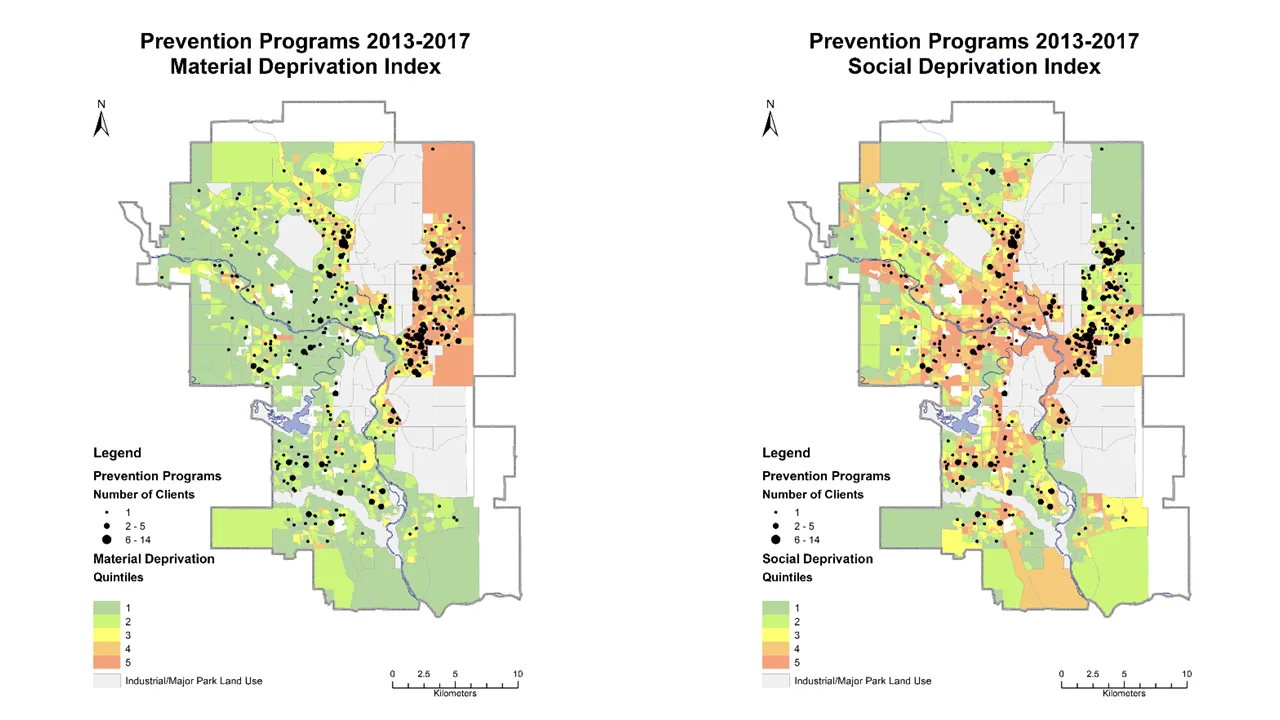
Most evaluations count who was served. Fewer ask who wasn’t. A program can meet its participant targets while missing the neighbourhoods where need is highest.
Comparing where participants come from with census, deprivation and community data answers that question directly. Our evaluation work with Calgary’s homelessness prevention programs combined de-identified client data with census, deprivation index and City of Calgary open data across four years, using hot spot analysis to test whether programs were reaching the communities with the greatest need. You can read more in why place matters in evaluation, or about how we use GIS across our work.
For funders focused on equity of access, this is often the question that matters most.
What your team will need to contribute
An evaluation is never fully outsourced. Expect to provide:
- One clear decision-maker, and someone who can answer program questions quickly.
- Access to program data and documents, with privacy and data-sharing arrangements to match.
- Help reaching participants, staff and partners for interviews or surveys.
- Time to review the framework, draft tools and draft findings.
- A willingness to hear findings that aren’t flattering, and to decide what to do about them.
A good proposal sets these out with dates. If it doesn’t, ask.
Questions to ask an evaluator before you hire
- What questions will this evaluation answer?
- Look for a short, specific list tied to decisions you need to make. “Assess the program’s effectiveness” is not an evaluation question.
- What data will you use, and what will you collect new?
- A good evaluator starts with what you already hold and adds new data collection only where it’s needed, which keeps the burden on staff and participants down.
- How will we know whether outcomes changed because of the program?
- Listen for honesty about contribution and attribution, and for a design that matches your budget rather than one that promises more certainty than it can deliver.
- Who is the report for?
- Boards, funders, staff and participants need different things. The deliverables should reflect who will actually use the findings.
- What happens if the findings aren’t what we hoped?
- You want independence and a constructive process: draft findings shared early, discussed openly, and no surprises in the final week.
- What will we own when it’s finished?
- Tools, indicator definitions and data templates should be yours to keep using, so the next evaluation doesn’t start from zero.
- Can you show similar work?
- Ask for examples close to your program type, population and data situation, not just a general list of clients.
When you need a second opinion
Sometimes the evaluation already exists, commissioned by a funder or from another firm, and the question is whether it holds up. An independent peer review checks whether the methods fit the questions, whether the conclusions follow from the evidence, and what the findings can safely be used for.
For the Sinneave Family Foundation, we peer reviewed two third-party assessments as part of a wider engagement that also built an organization-wide KPI framework and seven program dashboards.
Common questions
How long does a program evaluation take?
It depends on scope and on the program’s own timeline. An evaluation plan is a much smaller piece of work than an outcome evaluation, which has to wait until outcomes have had time to appear. Agree the timeline in writing before work begins.
Can we evaluate our own program?
Yes. Many organizations run their own monitoring and evaluation, especially with a solid framework in place. An external evaluator adds independence and specialist methods. A common middle path is for an external evaluator to design the framework and tools, staff to collect the data, and the evaluator to analyze and report.
Do we need an external evaluator for funder reporting?
It depends on the funder. Some require an independent evaluation, others accept internal reporting against agreed indicators. Check your funding agreement before scoping the work.
What is the difference between monitoring and evaluation?
Monitoring tracks a set of indicators routinely, often monthly or quarterly. Evaluation answers specific questions at particular points in time, including why results look the way they do. A good KPI framework supports both.
Is a logic model the same as an evaluation plan?
No. A logic model describes how the program is expected to work. An evaluation plan sets out the questions, indicators, data and methods used to test whether it does. The logic model usually comes first.
How is participant privacy protected?
Collect only what the evaluation questions need, de-identify data wherever possible, obtain informed consent for interviews and surveys, and put data-sharing agreements in place before any data changes hands.
The short answer
A program evaluation delivers answers to specific questions, backed by evidence: usually an evaluation framework, data collection tools, analysis, a findings report and recommendations. Scope varies enormously, so start with the questions you need answered and the decision the findings will inform, then judge each proposal against those.
Geo-Lens is a Calgary-based research, evaluation and funding consultancy working with nonprofits, charities, health organizations and research teams across Canada. Our program evaluation work covers evaluation plans, logic models and theories of change, outcome and KPI frameworks, mixed-methods evaluation and independent peer review of evaluations commissioned elsewhere. We add place-based analysis where it matters, asking not only who a program served but whether it reached the communities with the greatest need.