Quick answer
Point-in-Time counts are a one-night snapshot, usually taken every few years. They miss most hidden homelessness, they shift with weather, method and volunteer coverage, and their results arrive long after the night they describe. They are useful for public engagement and for surveying people’s experiences. They are not a sound basis for deciding where funding goes or whether policy is working.
Communities already have something better. Federally funded communities must run homelessness information systems and coordinated access built on real-time, by-name data that shows who is entering and leaving homelessness every month. That data, analyzed by place, should drive funding and policy, with PiT counts as one input among several.
Why I care about this
Before Geo-Lens, I managed the implementation of the Calgary Homeless Foundation’s homeless management information system. I am also a GIS analyst. Both jobs taught me the same lesson: homelessness is not a number on a night. It is a flow of people moving into, through and out of a system, in specific places, every day.
When you can see that flow, you can manage it: you can see who is arriving, where they are coming from, what is working and where people are stuck. When all you have is a snapshot taken every few years, you can only react to it. Yet the snapshot is the number that gets the headlines, the political debate and, increasingly, the verdict on whether public spending is working.
One night is carrying too much weight
The federal government supports nationally coordinated Point-in-Time counts, and communities across the country take part. When results are released, the headline is almost always the same: homelessness is up, or down, by some percentage since the last count. That number then travels into council chambers, legislatures and budget debates.
It travels further than that. When Canada’s Parliamentary Budget Officer assessed federal homelessness spending, it estimated that interventions funded by Reaching Home, which provided $1.6 billion to 6,855 projects between 2019-20 and 2022-23, were reducing the point-in-time count of homeless persons by about 6,000 people, or 15%, relative to what it would otherwise have been. The analysis is careful and useful. But it shows where the yardstick has landed: a program worth billions is being judged against a one-night count.
When a snapshot becomes the scoreboard, its weaknesses stop being technical footnotes. They become policy problems.
What a one-night count misses
- Most hidden homelessness. In the 2022 Canadian Housing Survey, 11.2% of households reported having experienced hidden homelessness, such as couch surfing, compared with 2.6% that had experienced sheltered or unsheltered homelessness. The kind of homelessness a street-and-shelter count is designed to find is the smaller part of the picture.
- The people most likely to be hidden. In a 2014 survey, Statistics Canada found that 18% of Indigenous people had experienced hidden homelessness, compared with 8% of non-Indigenous people. An undercount of hidden homelessness is not evenly spread; it falls hardest on the communities with the most at stake.
- The flow. One night shows who is homeless that night. It does not show how many people experience homelessness over a year, how many are falling in for the first time, how long they stay or how many return. A community with fast-moving, short episodes and one with a stuck chronic population can produce the same number.
- Change you can trust. Counts move with the weather, the date, the number of volunteers and changes in method. When the number goes up or down, it is genuinely hard to tell real change from noise.
- Timeliness. Counts happen every few years, and results are published months later. By the time the number shapes a budget, the situation on the ground has moved on.
The perverse incentive problem
Imagine funding tied directly to a count. Communities that work hardest to find everyone look worse. Communities that succeed in reducing homelessness risk losing money for succeeding. And every methodological choice comes under pressure, because the number has consequences.
This is not hypothetical. When the United States Department of Housing and Urban Development consulted on a funding formula for its homelessness program, it chose not to include point-in-time count data, because communities don’t all use the same methodology and because putting locally produced counts into an allocation formula could create perverse incentives against objective counting. The agency that requires more homeless counts than anyone decided they shouldn’t decide the money. We should take the hint.
We already have better data
The frustrating part is that the alternative already exists. Under the federal Reaching Home program, designated communities must use HIFIS or an equivalent homelessness information system to support real-time data for service planning, performance monitoring and outcome reporting, and run coordinated access from a by-name list that is kept current and shows inflows and outflows of homelessness.
Communities that have invested in that data are using it. The Canadian Alliance to End Homelessness reports that more than 50 communities supported through Built for Zero Canada now have high-quality, real-time data, and milestones such as Medicine Hat reaching functional zero chronic homelessness could not have been confirmed without by-name lists. That is what real-time data makes possible: not just a count, but evidence of whether a system is actually ending homelessness, month by month.
The infrastructure is there. What it lacks is the policy weight we keep giving the one-night count.
Real-time data is even more powerful on a map
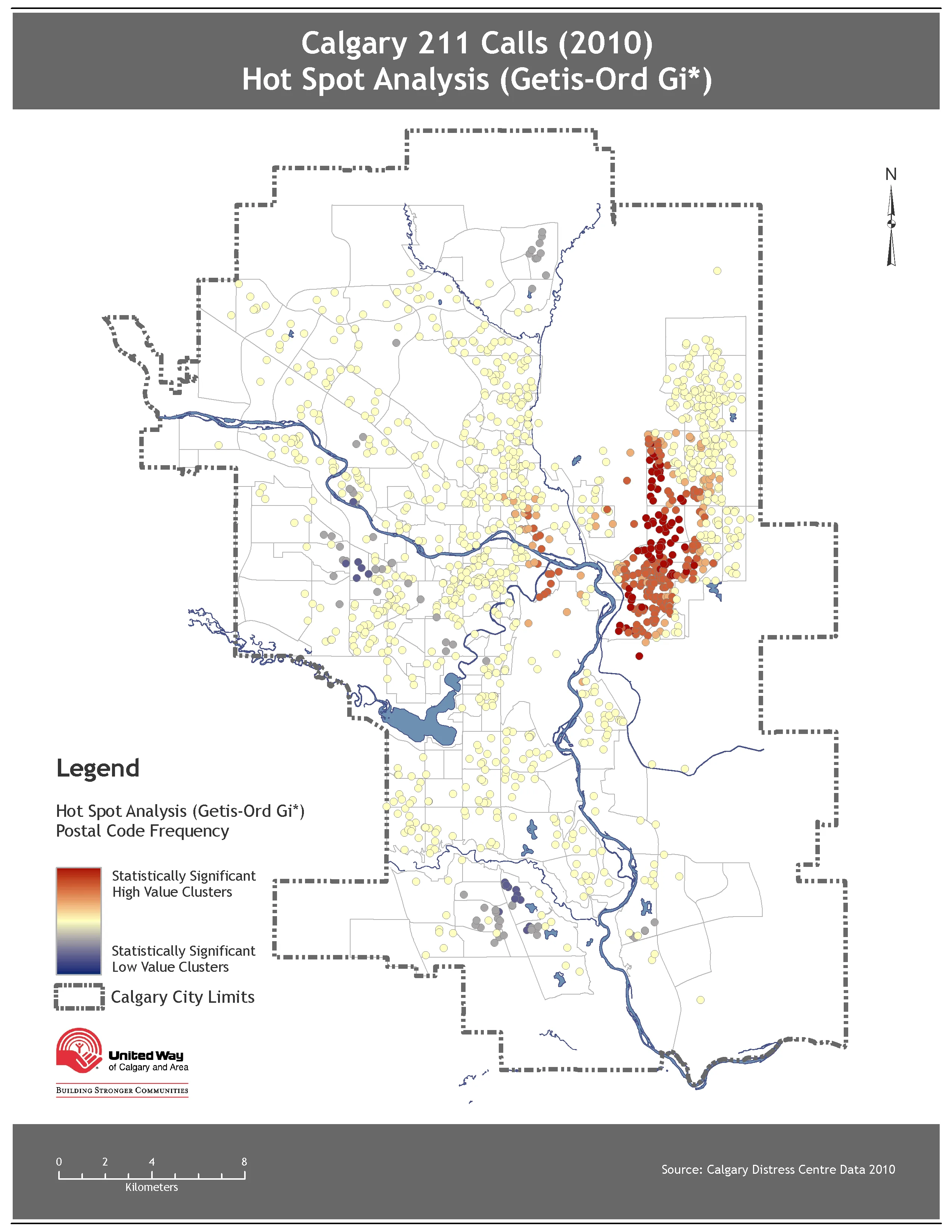
This is where my GIS background comes in. Real-time system data, de-identified and aggregated to areas so that no one can be identified, can show where people were last housed, which neighbourhoods are generating new inflow, and where prevention and outreach would have the most effect. That turns homelessness data from a scoreboard into a planning tool.
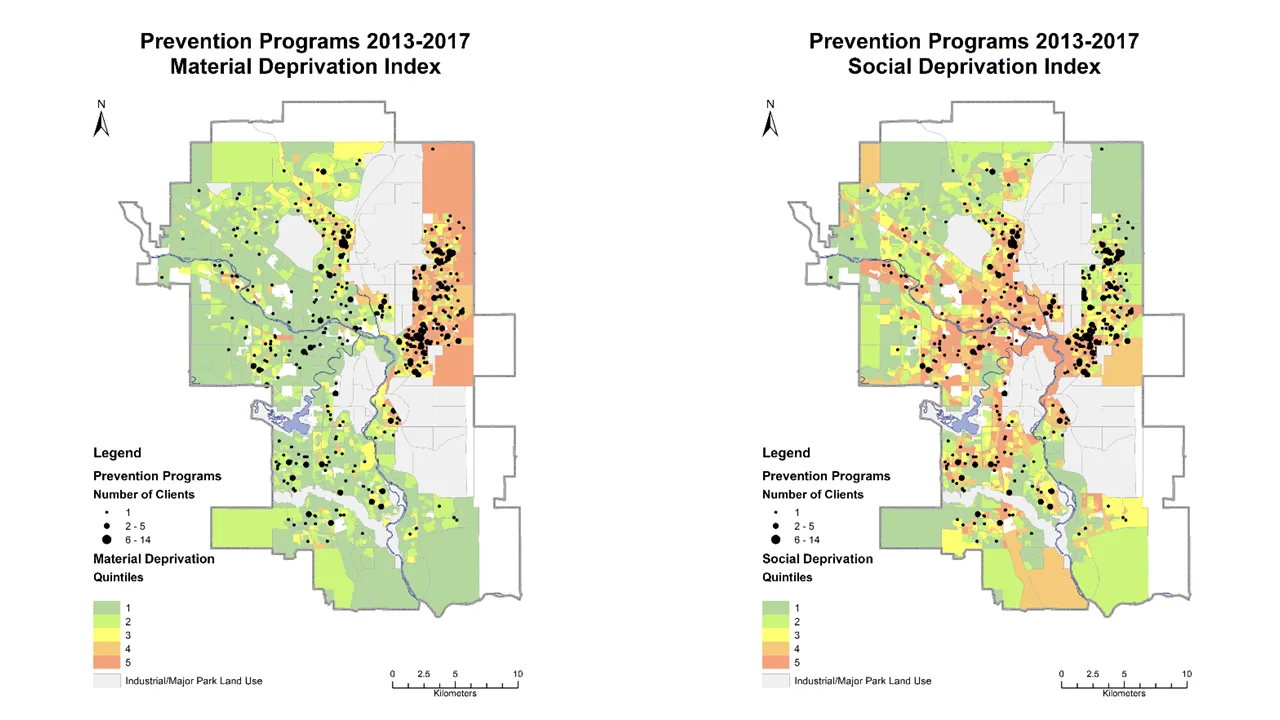
Our evaluation of homelessness prevention programs in Calgary did exactly this, combining de-identified client data from the homeless management information system with census and deprivation data to test whether programs were reaching the communities with the greatest need. See why place matters in evaluation, and why housing needs assessments go out of date for the same problem in housing.
What Point-in-Time counts are still good for
None of this means counts are worthless. They do some things well:
- Hearing from people directly. The survey that accompanies a count gathers information on experiences, pathways and needs that administrative systems don’t capture.
- Visibility. Counts can find people sleeping outside who aren’t connected to any service, and they engage volunteers and the public in a way few other exercises do.
- A baseline where nothing else exists. In communities without a homelessness information system or coordinated access, a count may be the best data available.
- A rough national picture, using a common approach across participating communities.
Keep them. Just stop letting them drive.
What should change
- Make real-time system data the primary measure for funding decisions and progress: people actively experiencing homelessness, inflow, outflow, chronic homelessness, length of time homeless and returns to homelessness.
- Fund data quality as a core service, not an add-on: full agency participation, outreach coverage and the staff who keep by-name data accurate.
- Publish system indicators regularly, so councils, funders and the public see a trend every month rather than a headline every few years.
- Analyze it by place, de-identified and aggregated, so prevention and resources go where inflow is actually coming from.
- Reposition PiT counts as a periodic survey and engagement exercise, not a scoreboard.
- Close the coverage gaps in real-time data, especially for hidden, rural and youth homelessness, by bringing schools, health services and community agencies into the system.
Common questions
Should communities stop doing Point-in-Time counts?
No. Counts are valuable for surveying people’s experiences, engaging the public and providing a baseline where no other data exists. The argument here is about their role: they shouldn’t be the primary basis for funding decisions or for judging whether policy is working.
Isn’t real-time data limited to people who use services?
Partly, and that is a real limitation. Hidden homelessness is under-represented in both counts and system data. The answer is to widen coverage, through outreach, by-name data on unsheltered homelessness and partnerships with schools, health services and community agencies, rather than to rely on a one-night snapshot.
Is Reaching Home funding allocated based on Point-in-Time counts?
Reaching Home allocations are set through a federal allocation model, and we are not suggesting the formula is driven by PiT counts. The concern is that PiT results increasingly shape how homelessness spending is debated and judged, including in federal assessments of the program.
What about communities without a homelessness information system?
There, a count may be the best data available for now. The priority should be building the system: Reaching Home designated communities are already required to use HIFIS or an equivalent, and smaller communities need support to do the same.
What should replace the headline number?
A small set of system indicators reported regularly: how many people are actively experiencing homelessness, how many entered and left in the period, how many are chronically homeless, how long people stay homeless and how many return.
Doesn’t real-time data raise privacy concerns?
It has to be handled carefully: with consent, under data-sharing agreements, de-identified for analysis and aggregated for publication so no individual can be identified. Communities already managing by-name lists under coordinated access have these safeguards in place.
The short answer
Point-in-Time counts are a one-night snapshot that misses most hidden homelessness, moves with weather and method, and arrives late. They are useful as a survey and engagement tool, but they shouldn’t drive funding or define success. Real-time, by-name system data, already required in federally funded communities and analyzed by place, should.
Geo-Lens is a Calgary-based research, evaluation and funding consultancy working with nonprofits, charities, health organizations, municipalities and research teams across Canada. Our research and evidence work includes homelessness and service data analysis, place-based analysis and evaluation, and our dashboards and KPI work helps organizations turn real-time system data into indicators that councils, funders and the public can follow.