Quick answer
A final report funders actually read is short, leads with results, compares what happened with what you promised, and is honest about what didn’t go to plan. Answer the funder’s questions in their order, put outcomes before activities, use a few clear numbers with one or two stories, explain the finances, and say what you learned and what comes next.
Treat it as the start of your next application, not the end of the last one. The outcomes, lessons and evidence you report are exactly what a renewal, or a new funder, will ask for.
Why so many reports go unread
Reporting takes real time. In the Center for Effective Philanthropy’s grantee surveys, the typical grant involves about eight hours a year of monitoring, reporting and evaluation. Yet the same organization’s research has found that fewer than half of funders share what they learn from reports with their grantees.
Its research also points to what makes reporting worthwhile. Grantees don’t object to the time; what they want is a conversation. Whether a grantee discussed its report with the funder was one of the strongest predictors of whether the grantee found the process helpful. So write a report that can be read in minutes, and that invites that conversation.
What funders are looking for
- Did you do what you said? Activities and outputs against the plan in your agreement.
- Did it make a difference? Outcomes for the people or community you served.
- How was the money spent? Budget against actuals, with variances explained.
- What changed, and why? Departures from the plan and how you responded.
- What did you learn? Including what you would do differently.
- What happens next? How the work continues, and what it will need.
- Did you meet the conditions? Acknowledgment requirements, required forms and attachments.
A structure that works
If the funder provides a template, follow it exactly, in its order. If it doesn’t, this structure covers what most funders want:
- A summary of one paragraph: what you set out to do, what happened, the two or three key results and one lesson. Many readers will stop here.
- Results against commitments: a short table comparing what you promised with what happened.
- Outcomes for participants: the data, plus one or two stories that illustrate it.
- What didn’t go to plan, and what you did about it.
- Finances: budget against actuals, with significant variances explained.
- Learning and next steps: what you will keep, change or stop, and what the work needs now.
- Attachments: only what was asked for, clearly labelled.
A results table does more work than paragraphs of narrative. For example:
| What we committed to | What happened | How we know |
|---|---|---|
| Deliver 24 tenancy rights workshops | 22 delivered; 2 postponed after a venue closure and rescheduled | Attendance records |
| Reach 300 tenants at risk of eviction | 341 participants, 62% from the two priority neighbourhoods | Intake data, mapped by neighbourhood |
| 70% report greater confidence in handling a landlord dispute | 64% at three-month follow-up (58% response rate) | Follow-up survey |
Show outcomes honestly
- Separate outputs from outcomes. Workshops delivered is an output; what changed for participants is an outcome. Your logic model already draws the line.
- Give denominators and response rates. “64% at follow-up” means more with “58% of participants responded” beside it.
- Compare with something. A baseline, a target or last year’s figure turns a number into a result.
- Don’t overclaim. Your program usually contributed to an outcome rather than causing it alone. Saying so builds credibility.
- Report mixed results plainly. A report where everything succeeded is less believable than one that explains a shortfall and what was learned from it.
Use stories well
One well-chosen story makes the data memorable; five stories in place of data make the report weaker. Choose stories that illustrate a pattern the numbers show, get consent for this specific use, and change or remove details that could identify someone. Short quotes from participants, staff or partners often work better than long case narratives.
Reporting what didn’t go to plan
Funders know plans change. What damages trust is a surprise in the final report. If something significant shifts during the grant, such as a delay, a change of staff or a budget reallocation, tell your program officer when it happens, and check whether your agreement requires approval. Then the final report confirms a change the funder already understands, and explains what you did and what it meant for results.
Make it the start of your next application
- Draw on the same indicators every time. Reports built from a consistent KPI framework take a fraction of the time and stay consistent across funders.
- Feed results into your case for support. Outcomes and lessons from each report strengthen the core case you adapt for every funder.
- Ask for a conversation. Offer a short call after submitting. It is the single best way to make sure the report is read, and it is where renewals start.
- Share it with your board. The report is a ready-made summary of what a grant achieved.
Before you submit
- Every question is answered, in the funder’s order and within word limits.
- Numbers match across the narrative, the financial report and any attachments.
- The report is consistent with any interim reports you submitted.
- You have consent for every story, quote and photo.
- Acknowledgment and recognition requirements have been met.
- Someone outside the program has read the summary and understood it.
- It is on time. Late reports can affect future funding: SSHRC, for example, won’t accept a new application from a grant holder whose achievement report is overdue.
Common questions
How long should a final report be?
As long as the funder’s template requires and no longer. If there is no template, aim for a summary someone can read in two minutes, with the detail behind it for those who want it.
What if we didn’t meet our targets?
Say so clearly, explain why, and show what you learned and changed. Funders generally value honesty, especially when they heard about the problem during the grant rather than for the first time in the report.
Can we reuse a report written for another funder?
Sometimes. In the Center for Effective Philanthropy’s research, most funders that accept alternative reports will take reports written for other funders. Otherwise, adapt the content: the results and evidence can usually be reused even when the format can’t.
Can we report verbally instead?
Some funders accept oral reports, particularly for smaller grants. It is worth asking, especially if a conversation would be more useful to both of you than a written report.
Do we need an evaluator to write a final report?
Usually not. A clear set of indicators and reliable program data are enough for most reports. Larger or multi-year grants sometimes require an independent evaluation; check your agreement.
What happens if a report is late?
It depends on the funder, but late reports can delay payments or affect eligibility for future funding. SSHRC, for example, does not accept a new grant application from someone whose achievement report is overdue until it is submitted.
The short answer
Write the final report so it can be read in minutes: lead with a one-paragraph summary, compare results with what you promised, show outcomes honestly with a few numbers and one or two stories, explain the finances and what changed, and end with what you learned. Then ask for a conversation, because that is where the report gets read and the next grant begins.
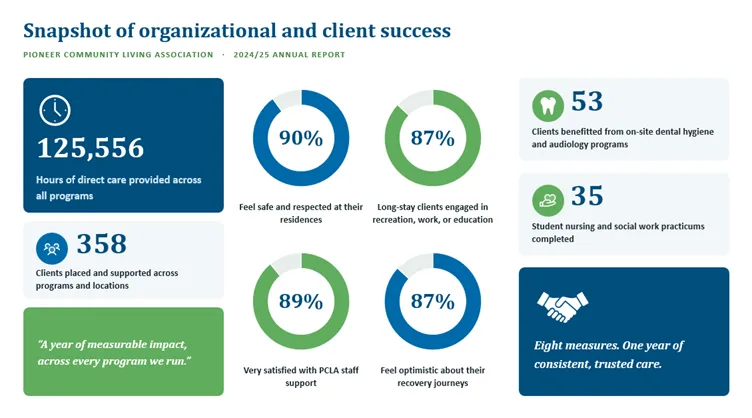
Geo-Lens is a Calgary-based research, evaluation and funding consultancy working with nonprofits, charities, health organizations and research teams across Canada. Our grant writing and grant management work includes reporting to federal, provincial, municipal and foundation funders, for example for Pioneer Community Living Association, and our program evaluation work builds the indicators that make reporting faster and more credible.