Quick answer
Every Canadian province and territory has a law foundation: an independent funder whose revenue comes mainly from the interest on lawyers’ pooled trust accounts. They fund access to justice, typically public legal information and education, legal research and law reform, legal services for people facing barriers, and public law libraries.
You don’t have to be a legal organization to apply. If the people you serve face legal problems with housing, income, family, disability, immigration or the justice system, and your project helps them understand or act on their rights, a law foundation may be a strong fit. Each one funds within its own jurisdiction, so organizations working in several regions should plan their applications as a coordinated portfolio.
What a law foundation is
When lawyers hold small or short-term amounts of client money, they deposit it in pooled (sometimes called mixed) trust accounts. The interest on those accounts goes neither to the lawyer nor to the client. By law, it is paid to the law foundation for that province or territory, which uses it for public purposes.
British Columbia created Canada’s first law foundation in 1969. Between 1971 and 1986 every other province and territory followed, each through its own legislation. Today there is one in every Canadian province and territory.
Two features make them different from most funders:
- Their purposes are set in legislation. What a foundation can fund is written into provincial or territorial law, usually some combination of legal education, legal research, law reform, legal aid and law libraries. That makes eligibility unusually clear, but a project has to fit those purposes, not just a general social good.
- Their revenue moves with interest rates. The Law Foundation of Ontario describes its trust account revenue as highly variable, driven by trust balances and interest rates. Grant budgets can grow or tighten from one year to the next for reasons that have nothing to do with your application.
Part of the money is committed before any community grants are made. In Ontario, the law requires 75% of trust account revenue after operating expenses to go to Legal Aid Ontario, with the remaining 25% used for access to justice grants. Alberta’s foundation contributes at least 25% of that revenue to Legal Aid Alberta. Even so, the remaining grant budgets are significant: the Law Foundation of British Columbia reports more than $120 million remitted from pooled trust accounts in 2025 and over $109 million in grants approved.
What law foundations typically fund
Mandates differ by jurisdiction, but most foundations fund some combination of:
- Public legal information and education. Plain-language guides, workshops, websites and outreach that help people understand their rights and what to expect from the justice system.
- Legal research and law reform. Research aimed at improving the law, legal policy or how justice is administered.
- Legal services for people facing barriers. Advice, representation and navigation, often delivered through community legal clinics, student legal services and similar programs.
- Law libraries that are open to the public.
Some foundations offer operating grants as well as project grants, and some run targeted funds for particular issues or populations. Alberta’s, for example, has run a fund focused on the legal needs of young people. Programs change, so always start from each foundation’s current guidelines.
You don’t have to be a legal organization
This is the point most nonprofits miss. Law foundations fund the legal needs of the public, and those needs show up all across the social sector: tenants facing eviction, families navigating custody or child welfare, people with disabilities dealing with benefits, guardianship or accessibility rights, newcomers working through immigration and employment law, and people in the justice system living with mental illness or brain injury.
If your organization already works with these people, you may be better placed than a legal organization to reach them with information they will actually use. Eligibility rules vary, but they are often broader than people assume. The Alberta Law Foundation, for example, funds incorporated non-profit organizations and First Nations, not only legal organizations.
| Your work | A possible law foundation angle |
|---|---|
| Housing and homelessness | Plain-language information on tenancy rights; navigation support linked to a legal clinic |
| Disability and brain injury | Accessible legal information; helping justice-sector workers recognize and accommodate cognitive disability |
| Mental health | Information on rights under mental health and consent legislation; support navigating the justice system |
| Newcomer services | Multilingual legal information on employment, housing and family law |
| Family violence | Information on protection orders and family law processes; court support |
| Youth services | Legal literacy for young people and early help before problems escalate |
Treat these as starting points to test, not guarantees of eligibility. Fit depends on the specific foundation’s mandate and current priorities.
Why law foundations get overlooked
- They don’t look like cause funders. Nonprofits search for funding by cause: housing, mental health, disability. Law foundations describe their purposes in legal terms, so the match isn’t obvious.
- The legal work is hidden inside the program. A housing worker who explains an eviction notice is providing legal information. It rarely gets described that way, so nobody thinks to look for legal funders.
- They are provincial and territorial. National organizations tend to look for national funders and miss thirteen jurisdiction-specific ones.
- The name suggests they’re for lawyers. “Law foundation” sounds like a professional body, not a public funder.
Working across provinces and territories
Because each foundation funds within its own jurisdiction, an organization working nationally can’t send one application. It needs a portfolio: separate applications, each adapted to a different mandate, priority list, budget format and cycle, ideally built from one shared core of evidence and program design.
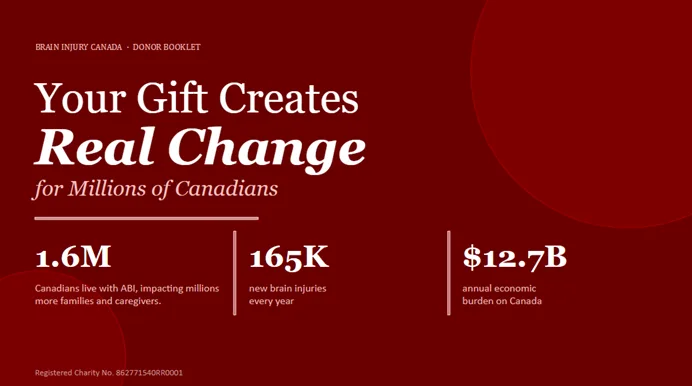
That is how we approached our work with Brain Injury Canada: five applications across Ontario, Manitoba, Saskatchewan, Newfoundland and Labrador, and Yukon, each tailored to its jurisdiction, with $718.5K sought across the portfolio.
A few things are worth knowing when you plan this way:
- Some foundations consider applicants based elsewhere. Alberta’s has accepted applications from organizations outside the province where the project benefits Albertans and has the support of the law foundation in the applicant’s home province. A relationship with your home foundation can open doors elsewhere.
- There is at least one national fund. The Law Foundation of Ontario’s Access to Justice Fund, created in 2009 from class action cy-près awards, has made grants across Canada.
- Sequence matters. A funded project and a track record in one jurisdiction make the case in the next one easier.
- Build a shared core. Write the needs evidence, logic model and evaluation plan once, then adapt the jurisdiction-specific parts. This is the difference between a funding strategy and a run of one-off applications.
How to make a strong case to a law foundation
- Name the legal need. Describe the specific legal problems your population faces, with evidence. Place-based data helps: where people are, which services they can reach and where the gaps are. This is where research and evidence work pays off in a funding application.
- Map the project to the mandate. Use the foundation’s own terms (public legal education, legal research, legal services) and show the line from your activities to that purpose. A logic model makes the line explicit.
- Be clear about legal advice. Legal information and legal advice are different. If your project includes advice, show who provides it and under what authority. Alberta’s foundation, for example, won’t fund legal advice from organizations without Approved Legal Service Provider status through the Law Society of Alberta.
- Bring in legal expertise. A community legal clinic, a law school clinic or volunteer lawyers reviewing your content strengthens both accuracy and credibility.
- Plan for public access. Expect requirements on how funded materials reach the public. Alberta’s foundation, for example, requires them to be free or available on a cost-recovery basis. Build distribution into the plan rather than treating it as an afterthought.
- Define outcomes you can measure. Reach is a start. Stronger applications also show whether people understood their rights, took action or resolved the problem, which is where program evaluation planning helps.
- Talk to staff first. Some foundations, including Alberta’s, ask applicants to speak with grants staff before applying. Even where it isn’t required, use that conversation to test fit before anyone starts writing.
A quick test: is a law foundation worth pursuing?
Look at how many of these describe your organization:
- The people you serve regularly face legal problems, even if you have never called them that.
- Your project would help people understand or act on their rights, improve legal services, or produce research that could improve law or policy.
- You can work with legal expertise to make sure the information is accurate.
- The people who benefit live in the foundation’s province or territory.
- You can describe outcomes in terms of access to justice, not only your usual program outcomes.
If three or more apply, a conversation with the foundation is worth having. If you work across several jurisdictions, it is worth building the plan before the first application, not after the third.
Common questions
Do we need to be a registered charity to apply to a law foundation?
Not necessarily. Requirements vary by foundation. Alberta’s, for example, funds incorporated non-profit organizations and First Nations. Check the current guidelines for each foundation you are considering.
Do law foundations fund operating costs?
Some do. Alberta’s, for example, offers operating grants for organizations whose ongoing work fits its objectives, alongside project grants. Programs change, so confirm what is open in your jurisdiction.
Can a national organization apply to more than one law foundation?
Yes, but each foundation funds within its own province or territory, so each application must be tailored to that jurisdiction and show benefit to the people who live there. Coordinating them as one portfolio saves effort and keeps the applications consistent.
Do law foundations fund legal advice?
Legal aid and legal services sit within most foundations’ mandates, often delivered through clinics, student legal services or other authorized providers. Rules on who may give legal advice differ by province and territory, so make the arrangements in your project explicit.
Why do law foundation grant budgets change from year to year?
Their main revenue is interest on lawyers’ pooled trust accounts, which depends on how much money is held in those accounts and on interest rates. When either changes, the amount available for grants changes with it.
The short answer
Law foundations are provincial and territorial funders, paid for mainly by interest on lawyers’ pooled trust accounts, that fund access to justice. You don’t need to be a legal organization: if the people you serve face legal problems and your project helps them understand or act on their rights, test the fit. If you work in more than one jurisdiction, plan your applications as a portfolio.
Geo-Lens is a Calgary-based research, evaluation and funding consultancy working with nonprofits, charities, health organizations and research teams across Canada. Our funding and sustainability work includes law foundation applications adapted to each provincial and territorial mandate and coordinated as portfolios, alongside community and corporate foundations, government programs and federal research grants. Because it sits on top of our research and data practice, the legal need in each application rests on evidence about the community and population being served.