Quick answer
CIHR Project Grants are scored on Significance and Impact of the Research (25%) and Feasibility (75%), which splits into Approaches and Methods (50%) and Expertise, Experience and Resources (25%). SSHRC Insight Grants are scored on Challenge (40%), Feasibility (20%) and Capability (40%). In both, reviewers score the application against the criteria, not the idea in the abstract.
Applications most often fall short because the methods aren’t convincing, the objectives are vague, the team doesn’t match the plan, or the training and knowledge mobilization plans read as afterthoughts. Competition is intense: in CIHR’s Spring 2026 Project Grant competition, 13.1% of applications were funded and more than half were never discussed by a committee.
The odds, in numbers
Figures below are as of June 2026; they change with every competition.
In the CIHR Project Grant Spring 2026 competition, 3,344 applications were submitted and 439 were funded, a success rate of 13.1%. More than half, 55.9%, were streamlined: removed from committee discussion because of their initial scores. Funded budgets were also reduced by 23.5% across the board so that more highly ranked projects could be supported.
At SSHRC, Insight Grant applications ranked in roughly the lowest 35% by committee consensus are normally not discussed at the final stage, and the targeted success rate for smaller Stream A requests is higher than for Stream B.
The practical lesson: an application has to be clearly strong on first read against every criterion. Being good is not enough to be discussed, let alone funded.
How CIHR scores a Project Grant
| Criterion | Weight | What reviewers ask |
|---|---|---|
| Significance and Impact of the Research | 25% | Is the idea creative and the rationale sound? Are the goals well defined? Will it advance health knowledge, care, systems or outcomes? |
| Approaches and Methods | 50% | Are the methods appropriate to deliver the outputs? Are the timelines realistic? Are challenges identified, with mitigation strategies? |
| Expertise, Experience and Resources | 25% | Does the team have the right expertise and commitment, a suitable environment, and evidence of productivity and impact? |
Applications are rated from 0 to 4.9, and only those rated 3.5 or higher may be funded. In CIHR’s guidance to reviewers, 4.5 to 4.9 describes innovative work with very few flaws, while 3.5 to 3.9 describes applications that are compelling but limited in scope or impact, or raise concerns about feasibility or the team.
- The budget is assessed separately. Reviewers check that it is appropriate and well justified, but it must not affect the scientific rating.
- Sex and gender-based analysis is assessed by reviewers as a strength, a weakness or not applicable, and that assessment is reflected in the score.
- Productivity is judged in context. Reviewers are told to consider career stage and leave history, and not to use journal metrics such as the h-index as a stand-in for quality.
How SSHRC scores an Insight Grant
| Criterion | Weight | What reviewers look at |
|---|---|---|
| Challenge: the aim and importance of the endeavour | 40% | Originality and contribution, literature review, theoretical framework, methods, training and mentoring, and potential impact |
| Feasibility: the plan to achieve excellence | 20% | Timeline, the team’s expertise for this project, budget justification, and the knowledge mobilization plan |
| Capability: the expertise to succeed | 40% | Past outputs relative to career stage, past knowledge mobilization and impact, and past training of students and other highly qualified personnel |
Each criterion is scored on a six-point scale, and an application must score at least 3.0 on every criterion to be recommended for funding. One weak criterion can sink an otherwise strong application. Committees consider only the last six years of research contributions, take career interruptions into account, and read external assessments without being bound by them.
Two differences catch applicants who know CIHR. At SSHRC, methods sit under Challenge rather than Feasibility, and track record carries 40% of the score. Insight Development Grants use the same three criteria but weight Challenge more heavily, at 50%, with Feasibility at 20% and Capability at 30%.
Why strong ideas go unfunded
- The methods don’t carry the weight. At CIHR, approaches and methods are half the score. Vague sampling, an unstated analysis plan, assumed data access or no plan for things going wrong all cost points.
- The objectives are broad or slippery. If a reviewer can’t say what will be done and how success will be judged, the significance and feasibility scores both suffer.
- Significance is asserted, not argued. Saying a problem is important isn’t the same as showing the gap in knowledge, the evidence behind it and who will use the results.
- The team doesn’t match the plan. Methods that need expertise no one on the team has, co-applicants with unclear roles, and letters that say nothing concrete about commitment.
- Training and knowledge mobilization are afterthoughts. SSHRC scores training under Challenge and knowledge mobilization under Feasibility, and CIHR expects knowledge translation to be considered. “We will publish and present at conferences” is not a plan.
- Required considerations are missing or token. Sex and gender-based analysis at CIHR, and both agencies’ guidelines for Indigenous research, need to be addressed specifically, not with boilerplate.
- It is hard to read. Reviewers assess many applications. Repetitive background, no clear roadmap and dense pages make strengths easy to miss.
- It is in the wrong place. SSHRC won’t accept applications better suited to CIHR or NSERC, and research where program evaluation is the primary objective isn’t eligible for an Insight Grant. Choosing the right agency and committee matters.
If you are a community partner
Many nonprofits take part in research grants as partners, collaborators or knowledge users rather than as applicants. What partners contribute is scored, directly or indirectly:
- Real engagement of knowledge users. In the Spring 2026 CIHR competition, applications using integrated knowledge translation had a success rate of 14.0%, slightly above the 13.1% overall. That shows correlation, not cause, but reviewers do look for partners who shape the research rather than just receive it.
- Letters that describe concrete commitments, such as data access, participant recruitment, in-kind time or co-design, rather than general support.
- Community evidence of need, which strengthens the significance argument.
If what your organization actually needs is to know whether its own program works, a research grant may be the wrong vehicle. See what a program evaluation delivers instead.
Using your reviews to resubmit
- Know how close you were. Since May 2026, CIHR Notices of Decision include a “not approved rank” showing how an unfunded application ranked relative to the funding cutoff. SSHRC provides external assessments and a summary of the committee’s evaluation.
- Look for patterns, not individual comments. If two reviewers question the same method, that is the priority.
- Address every criticism explicitly in the revised application, even where you disagree.
- Remember each competition is reviewed afresh. CIHR places no limit on resubmissions, but new reviewers may raise new concerns. Strengthen the whole application, not just the criticized parts.
A pre-submission check
Read the application as a tired reviewer would, against the official criteria:
- Can someone outside your subfield state your objectives after reading the first page?
- Does every objective have a matching method, timeline and deliverable?
- Have you named the main risks and how you will handle them?
- Does each team member’s expertise map to a specific part of the plan?
- Is the budget justified item by item, and clearly distinct from funding you already hold?
- Are training, knowledge mobilization, sex and gender, and Indigenous research considerations specific to this project?
- Has someone outside the team reviewed it against the criteria? Many university research offices run internal review programs for this purpose.
Where outside support helps, and where it doesn’t
The science belongs to the research team, and no writer can make a weak idea fundable. Where outside support adds the most is in making a strong idea easy for reviewers to score: structuring the application around the criteria, sharpening objectives, developing training and knowledge mobilization plans, engaging partners, justifying the budget and bringing in community data.
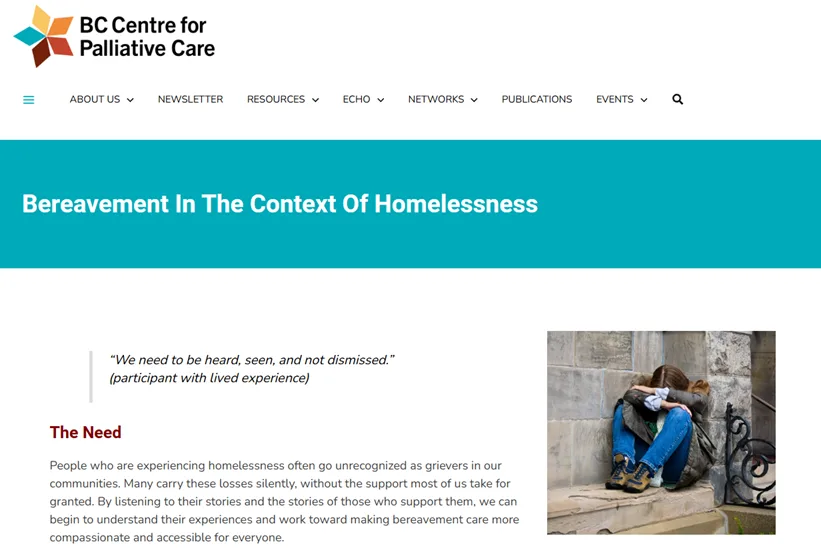
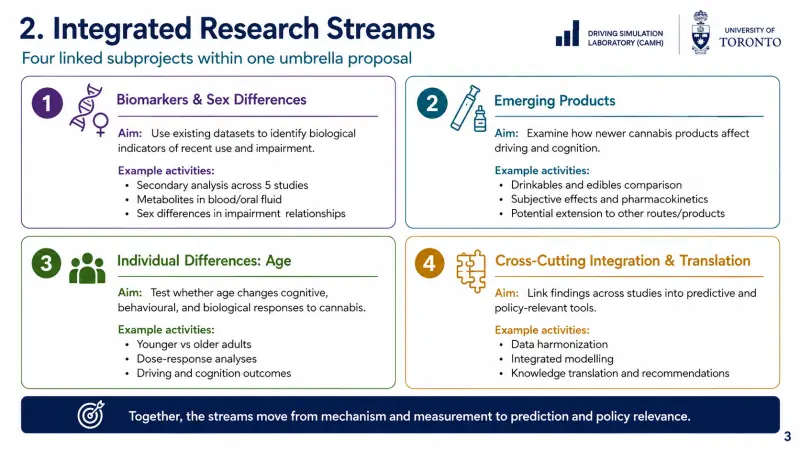
For a UBC Okanagan research team, that work began with a 2018 SSHRC Partnership Development Grant and continued through two SSHRC Insight Grants, a SSHRC Partnership Grant and other awards: about $2.17M across seven funded grants between 2018 and 2025. Our research funding work also includes a four-year national study of bereavement in the context of homelessness, funded by a $274,900 SSHRC Insight Grant, and the research program design for a Mitacs Accelerate application with CAMH’s driving simulation laboratory. If you are considering AI tools in your writing, see what Canada’s research funders say about AI.
Common questions
How long should we allow to prepare a CIHR or SSHRC application?
Several months is common for a competitive application, particularly with partners involved. University research offices often set internal deadlines several weeks before the agency deadline, so plan backwards from those.
Can we find out why we weren’t funded?
Yes. CIHR provides reviewer comments and, since May 2026, a “not approved rank” relative to the funding cutoff. SSHRC provides the external assessments and a summary of the committee’s evaluation.
Is it worth resubmitting?
Often, especially if your scores or rank were near the cutoff. CIHR places no limit on resubmissions, but each competition is reviewed by new reviewers, so strengthen the whole application rather than only answering past comments.
Can a nonprofit apply directly for these grants?
Insight Grant applicants must be affiliated with an eligible Canadian postsecondary institution, and CIHR Project Grants are led by researchers at eligible institutions. Community organizations usually take part as partners, collaborators or knowledge users.
How do we choose the right committee?
Read the committee mandates closely; CIHR updated 32 of them for the Fall 2026 competition. SSHRC lets applicants choose among discipline-based, multidisciplinary and thematic committees. When in doubt, ask the agency’s program staff before you apply.
Do these criteria apply to every CIHR and SSHRC program?
No. This article covers CIHR Project Grants and SSHRC Insight Grants. Other programs, including Insight Development Grants, partnership grants and the Tri-Agency Interdisciplinary Peer Review Committee, use their own criteria or weightings. Always work from the current competition page.
The short answer
CIHR and SSHRC reviewers score applications against weighted criteria, and most unfunded applications lose points where the applicant underestimated a criterion: methods at CIHR, track record and training at SSHRC, and knowledge mobilization at both. With success rates as low as they are, write to the criteria, test the application against them before submitting, and use the feedback when you resubmit.
Geo-Lens is a Calgary-based research, evaluation and funding consultancy working with nonprofits, charities, health organizations and research teams across Canada. Our grant writing work includes federal research applications to CIHR, SSHRC and Mitacs, developed with research teams and community partners: structure against the criteria, training and knowledge mobilization plans, partnership engagement, budget justification and community data. The science stays with the researchers; our job is to make its strength easy for reviewers to see.